Run the whole campaign
from one seat.
Prep, run, remember. The Command Center holds your world's every moving part, and keeps its secrets. Built for the laptop at the head of a real table.
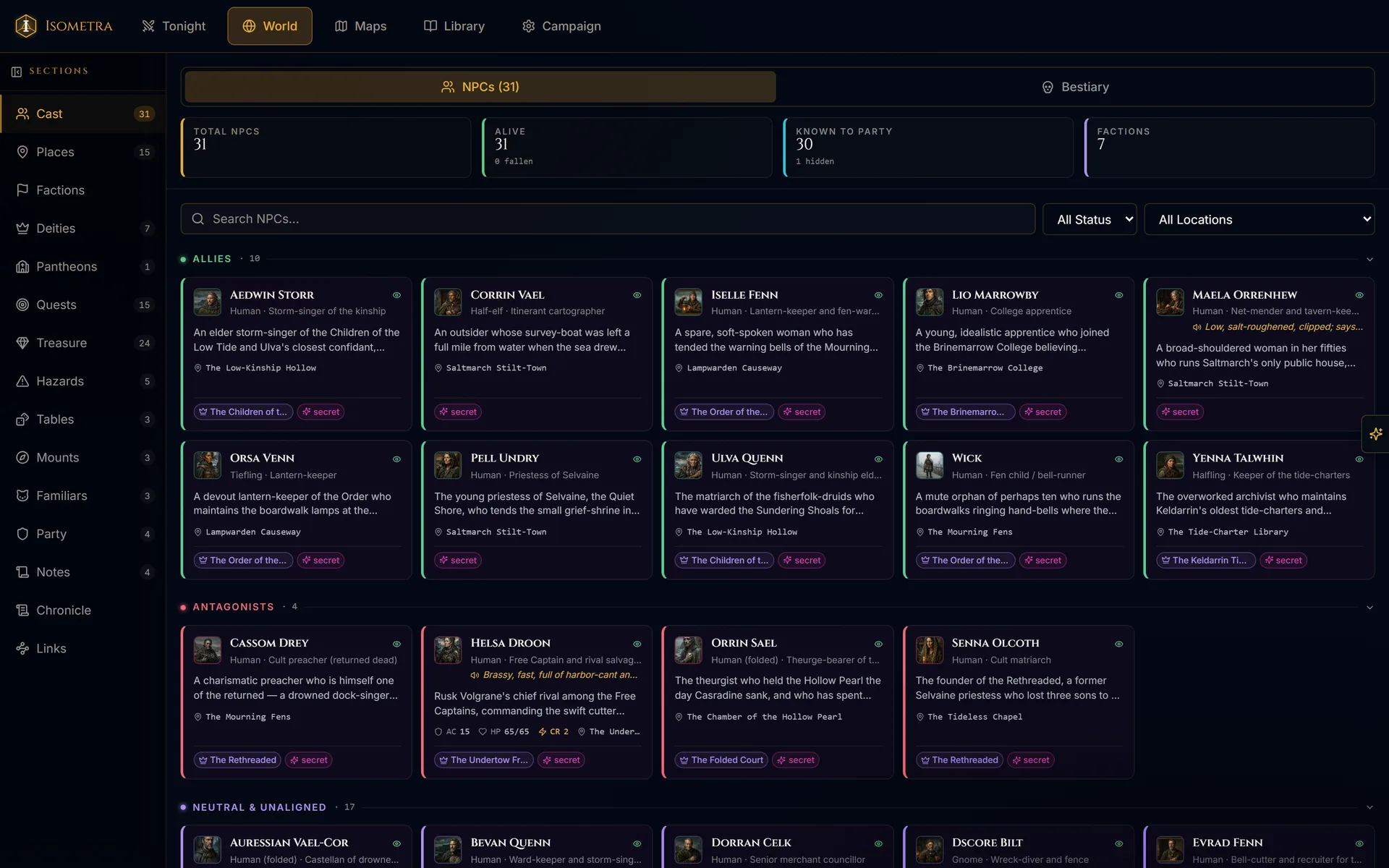
Every thread of your world, on its own page.
NPCs, locations, quests, factions, deities, treasure, traps, monsters, mounts and familiars each get a full page: portrait, story, stats, relationships, and a DM-only secrets panel your players will never see. View and edit are the same surface; nothing lives in a buried modal.
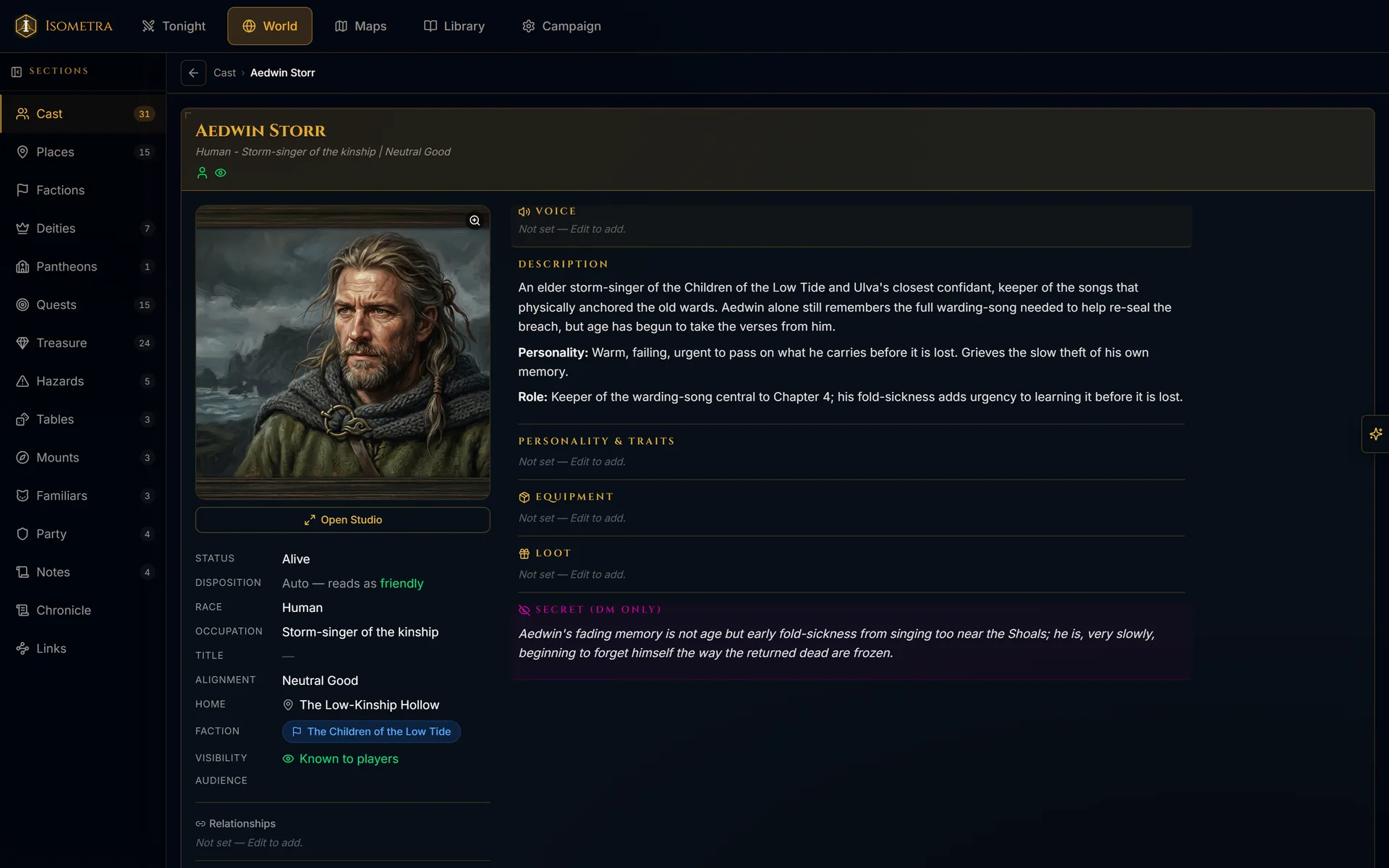
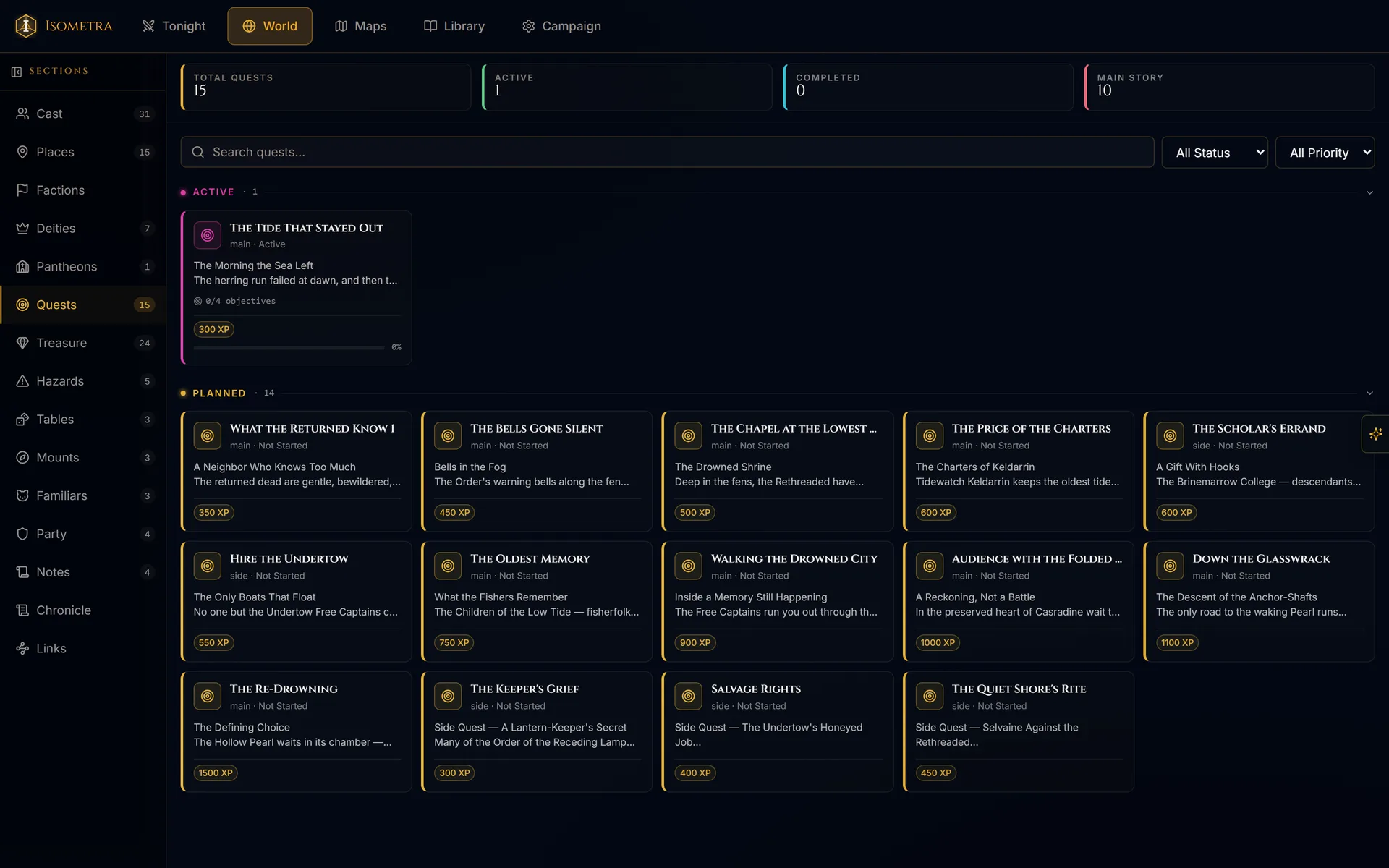
Threads and treasure, accounted for.
Quests track their threads, givers, and stakes; hoards aggregate real items with provenance. When the rogue finally cracks the strongbox, what's inside was written down three sessions ago, not invented under pressure.
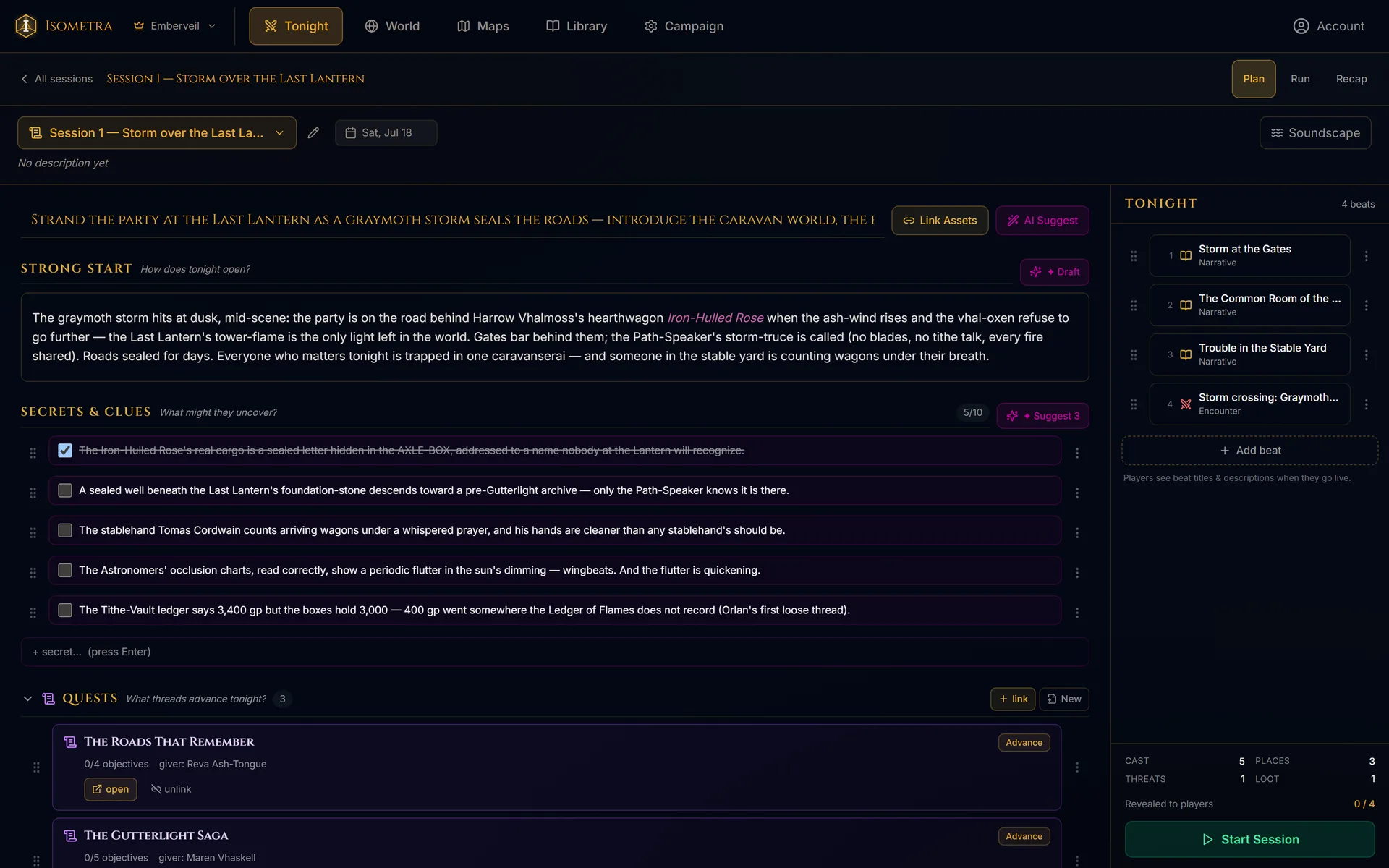
Plan the night the way you run it.
Goal, strong start, secrets and clues, the cast on stage, the beats in order. A Lazy-DM-shaped sheet with the Loremaster in the margin and a “Tonight” rail you stage by dragging. When the party veers, everything you didn't use carries forward to next week.
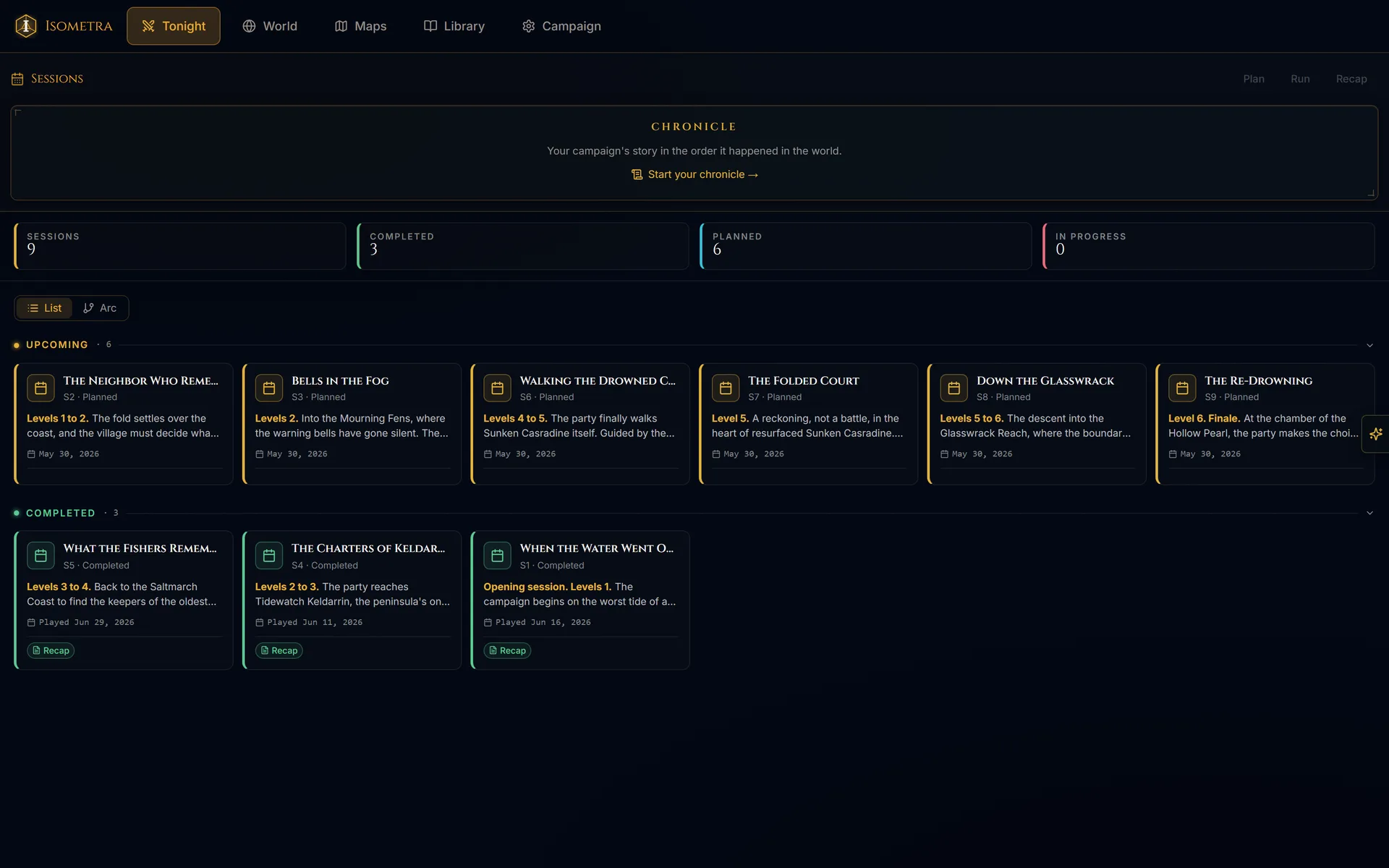
The campaign remembers itself.
Every session keeps its recap, its rolls, its reveals. Nine sessions in, you can answer “wait, who told us about the tide-charters?” in one search instead of twenty minutes of notebook archaeology.
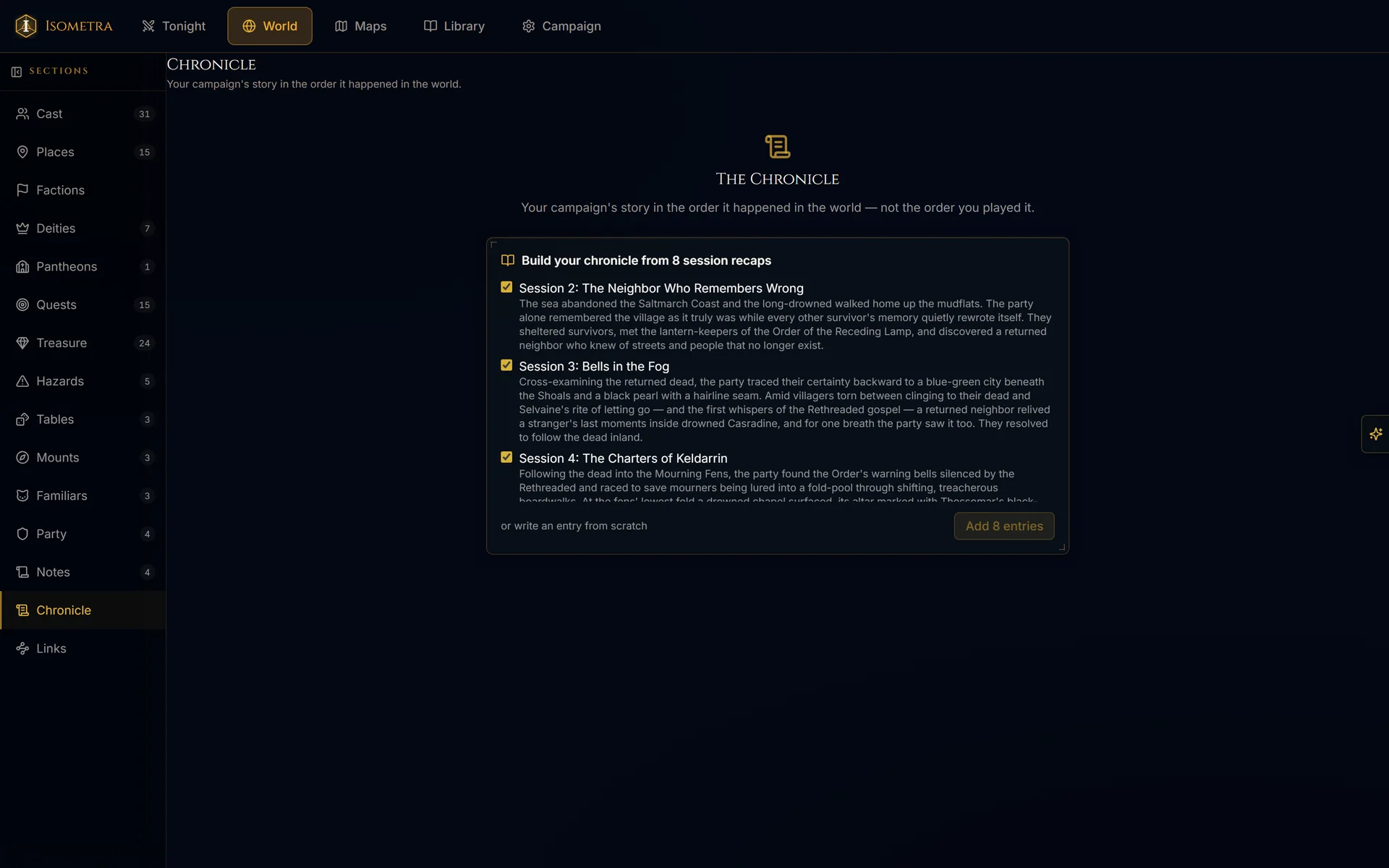
The story, in the order it happened.
Sessions happen in the order you play them; the story happened in a different order entirely. The Chronicle starts from the recaps you have already written, offering one entry per session and letting you keep the ones that matter. From there it becomes a spine of events in fiction time that you reorder by dragging. When a player asks how long ago the treaty was signed, there is an answer.
Tools for the night itself.
Initiative and combat tracking, a narrative stream, the player-roll feed, check requests, loot drops and handout pushes. One surface for the whole night, ending in a session recap.
A three-bus soundboard for a music bed, layered ambience and sound effects, stocked with a curated, properly-licensed library. Crossfades included; the tavern hushes when the door slams open.
Throw a battle map, a location's art, or an NPC portrait onto the TV or projector. Join by 6-character code from any TV browser, or one-tap Google Cast from Chrome. Secrets stay on your screen.
Author a handout from six templates, then save it and print it for the table. Separately, push a note or an image straight to every player's phone mid-session. Any NPC, item, or location prints as a cut-guide card from the Print Studio.
Keep your improv tables inside the campaign, so you can roll them in play, link their results, let the Loremaster draft new ones from your world's flavor.
@-mention any NPC, place, quest, or faction in your notes and it becomes a living link. Click it and the record opens as a read-only card over your place in the page, with a Maximize control when you want the whole thing. Your prep and your canon stay one thing.